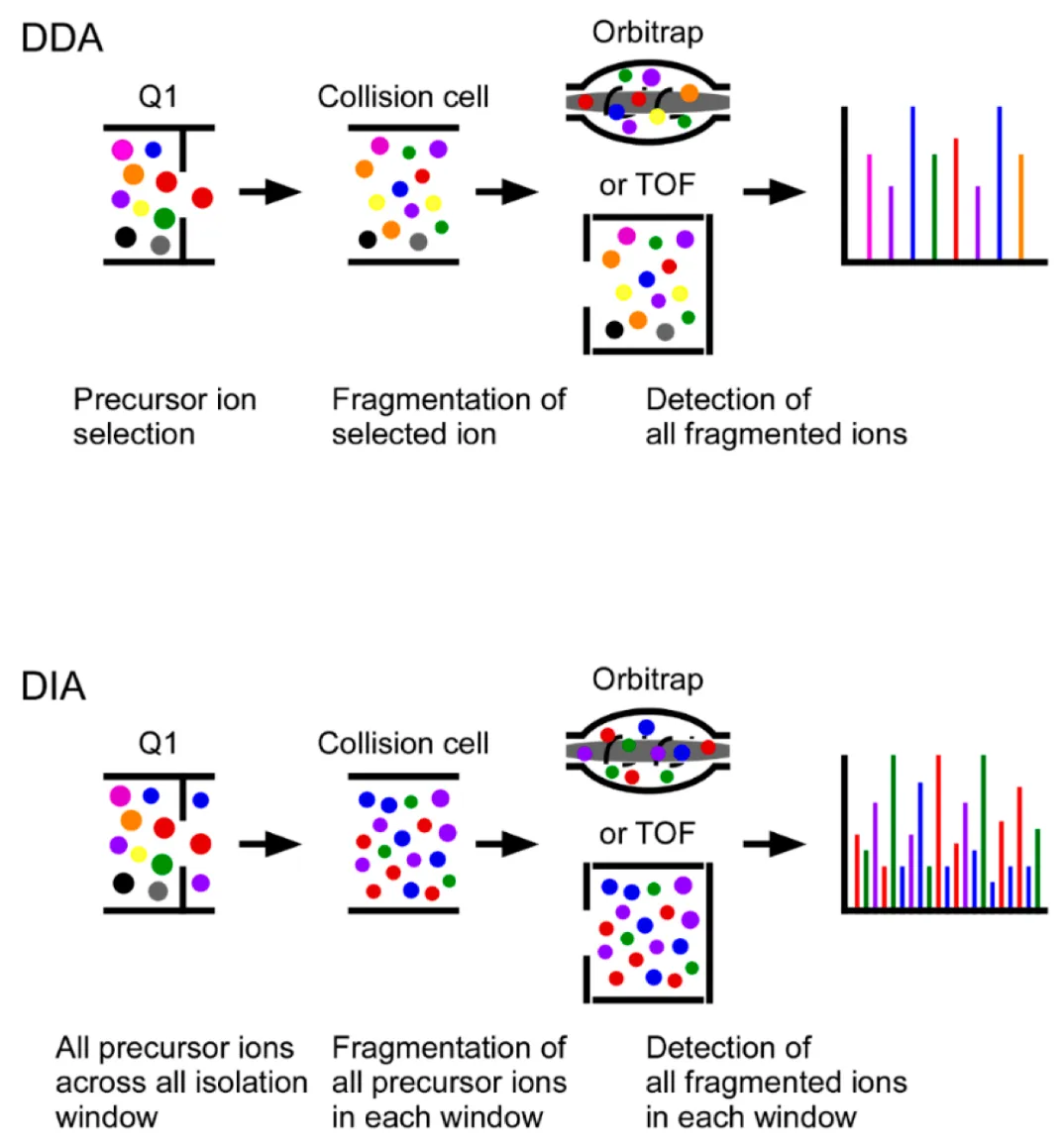
<?xml version="1.0" encoding="utf-8"?><feed xmlns="http://www.w3.org/2005/Atom" ><generator uri="https://jekyllrb.com/" version="3.10.0">Jekyll</generator><link href="https://mtoz-biolabs.github.io/MtoZ-Biolabs/feed.xml" rel="self" type="application/atom+xml" /><link href="https://mtoz-biolabs.github.io/MtoZ-Biolabs/" rel="alternate" type="text/html" /><updated>2026-05-20T02:55:27+00:00</updated><id>https://mtoz-biolabs.github.io/MtoZ-Biolabs/feed.xml</id><title type="html">MtoZ Biolabs Blog</title><subtitle>MtoZ Biolabs is an integrate contract research organization (CRO) providing advanced proteomics, metabolomics, bioinformatics, and biopharmaceutical analysis services to researchers in biochemistry, biotechnology, and biopharmaceutical fields. </subtitle><entry><title type="html">DIA MS (Data-Independent Acquisition Mass Spectrometry)-Based Quantitative Service</title><link href="https://mtoz-biolabs.github.io/MtoZ-Biolabs/2026/05/20/dia-ms-based-quantitative-service.html" rel="alternate" type="text/html" title="DIA MS (Data-Independent Acquisition Mass Spectrometry)-Based Quantitative Service" /><published>2026-05-20T00:00:00+00:00</published><updated>2026-05-20T00:00:00+00:00</updated><id>https://mtoz-biolabs.github.io/MtoZ-Biolabs/2026/05/20/dia-ms-based-quantitative-service</id><content type="html" xml:base="https://mtoz-biolabs.github.io/MtoZ-Biolabs/2026/05/20/dia-ms-based-quantitative-service.html"><![CDATA[<p>DIA MS (Data-Independent Acquisition Mass Spectrometry)-Based Quantitative Service utilizes next-generation proteomics technology to enable comprehensive, reproducible, and high-throughput protein quantification. Unlike Data-Dependent Acquisition (DDA), which stochastically selects precursor ions for fragmentation, DIA systematically fragments all ions within a given m/z range, ensuring consistent and deep proteome coverage across multiple conditions. The DIA-MS-based quantitative method enhances quantification accuracy, and enables high-throughput, large-scale studies in biomedical and clinical research.</p>

<div style="text-align:center;">
  <img src="/MtoZ-Biolabs/images/dia-ms-based-quantitative-service1.webp" alt="dia-ms-based-quantitative-service1" style="max-width:100%;" />
</div>

<div style="text-align:right;">
  <i>Ryu, J. et al. Molecules. 2021.</i>
</div>

<div style="text-align:center; font-weight:bold;">
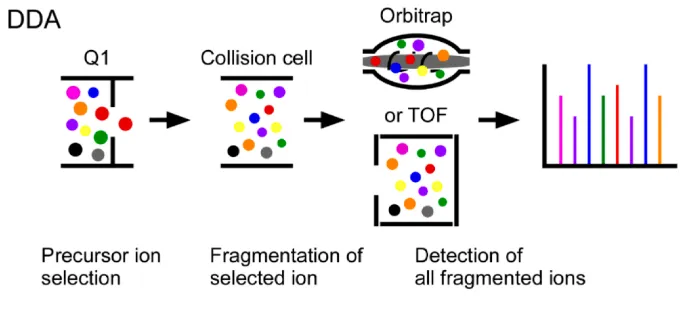
  Figure 1. Principles of Data-Dependent Acquisition (DDA) and Data-Independent Acquisition (DIA) in Untargeted Quantitative Proteomics
</div>

<p>In phosphoproteomics, precise quantification of phosphorylation events is essential for understanding cell signaling, kinase activity, and disease mechanisms. DIA-MS outperforms DDA-MS by detecting low-abundance phosphorylated peptides with higher accuracy and reproducibility. MtoZ Biolabs offers a DIA MS-Based Quantitative Service that integrates optimized phosphopeptide enrichment, high-resolution LC-MS/MS, and advanced bioinformatics to deliver reliable phosphorylation site quantification. Whether investigating kinase-substrate interactions, drug responses, or phosphorylation-based biomarkers, the DIA MS-Based Quantitative Service supports high-resolution and scalable phosphoproteomic analysis.</p>

<h1 id="analysis-workflow">Analysis Workflow</h1>

<ol>
  <li>
    <p>Sample Preparation: Extract proteins, quantify concentration, and enzymatically digest into peptides.</p>
  </li>
  <li>
    <p>Phosphopeptide Enrichment: Phosphorylated peptides are selectively enriched using IMAC, TiO₂, or antibody-based methods to improve detection sensitivity.</p>
  </li>
  <li>
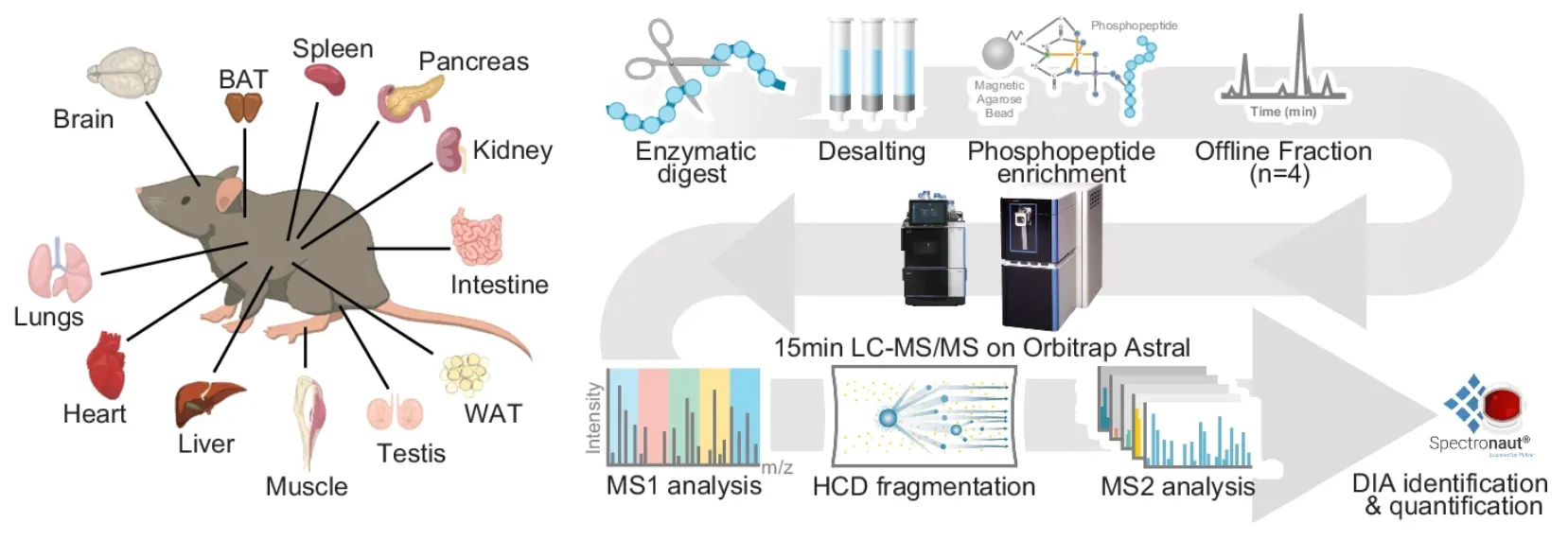
    <p>LC-MS/MS Analysis: Peptides are separated by liquid chromatography (LC) and analyzed using DIA-MS, where all precursor ions are fragmented simultaneously, ensuring comprehensive phosphopeptide detection with high reproducibility.</p>
  </li>
  <li>
    <p>Spectral Library Generation and Data Processing: Custom DIA-specific spectral libraries and bioinformatics algorithms enable precise phosphorylation site identification and quantification.</p>
  </li>
  <li>
    <p>Bioinformatics Analysis and Functional Interpretation: Phosphorylation sites are mapped to kinases, signaling pathways, and regulatory networks, with statistical analysis providing biological insights.</p>
  </li>
</ol>

<div style="text-align:center;">
  <img src="/MtoZ-Biolabs/images/dia-ms-based-quantitative-service2.webp" alt="dia-ms-based-quantitative-service2" style="max-width:100%;" />
</div>

<div style="text-align:right;">
  <i>Lancaster, N. M. et al. Nat Commun. 2024.</i>
</div>

<div style="text-align:center; font-weight:bold;">
  Figure 2. Workflow of DIA MS (Data-Independent Acquisition Mass Spectrometry)-Based Quantitative Service
</div>

<h1 id="service-advantages">Service Advantages</h1>

<ul>
  <li>DIA provides unbiased, comprehensive scans, ensuring greater protein resolution and fewer missing values than DDA and standard LFQ methods.</li>
  <li>Achieves quantitative precision comparable to PRM, enabling reliable phosphorylation site quantification across different experimental conditions.</li>
  <li>Captures low-abundance phosphorylation sites with high sensitivity, ensuring deep phosphoproteomic profiling.</li>
  <li>Suitable for analyzing blood, exosomes, FFPE tissues, urine, and other disease-relevant samples, supporting diverse biomedical research.</li>
</ul>

<h1 id="applications">Applications</h1>

<ol>
  <li>Biomarker Discovery and Validation</li>
</ol>

<p>DIA MS enables precise quantification of phosphorylation-based biomarkers, facilitating early disease detection, prognosis, and patient stratification.</p>

<ol>
  <li>Tumor Subtype Classification</li>
</ol>

<p>By profiling phosphorylation signatures across tumor samples, DIA MS-Based Quantitative Service helps classify tumor subtypes, guiding personalized oncology treatments.</p>

<ol>
  <li>Drug Mechanism and Response Studies</li>
</ol>

<p>DIA MS quantifies phosphorylation changes in drug-treated samples, providing insights into kinase inhibitor efficacy, off-target effects, and resistance mechanisms. This data-driven approach supports drug development by monitoring dynamic phosphorylation alterations in response to targeted therapies.</p>

<ol>
  <li>Personalized Medicine and Treatment Optimization</li>
</ol>

<p>DIA MS-Based Quantitative Service provides quantitative phosphorylation profiling for individualized treatment strategies, enabling clinicians to tailor targeted therapies based on a patient’s unique phosphoproteomic signature. It aids in treatment monitoring and response prediction to improve clinical outcomes.</p>

<ol>
  <li>Comparative Studies in Agriculture and Forestry</li>
</ol>

<p>DIA MS-Based Quantitative Service enables researchers to systematically analyze protein expression patterns in crops, trees, and other plant species. By leveraging DIA technology, researchers can generate large-scale proteomic datasets to study stress resistance, trait improvement, and genetic adaptation, advancing sustainable agriculture and forestry management.</p>

<h1 id="case-study">Case Study</h1>

<p>DIA-MS-Based Quantitative Phosphoproteomics for CK1 Substrate Identification</p>

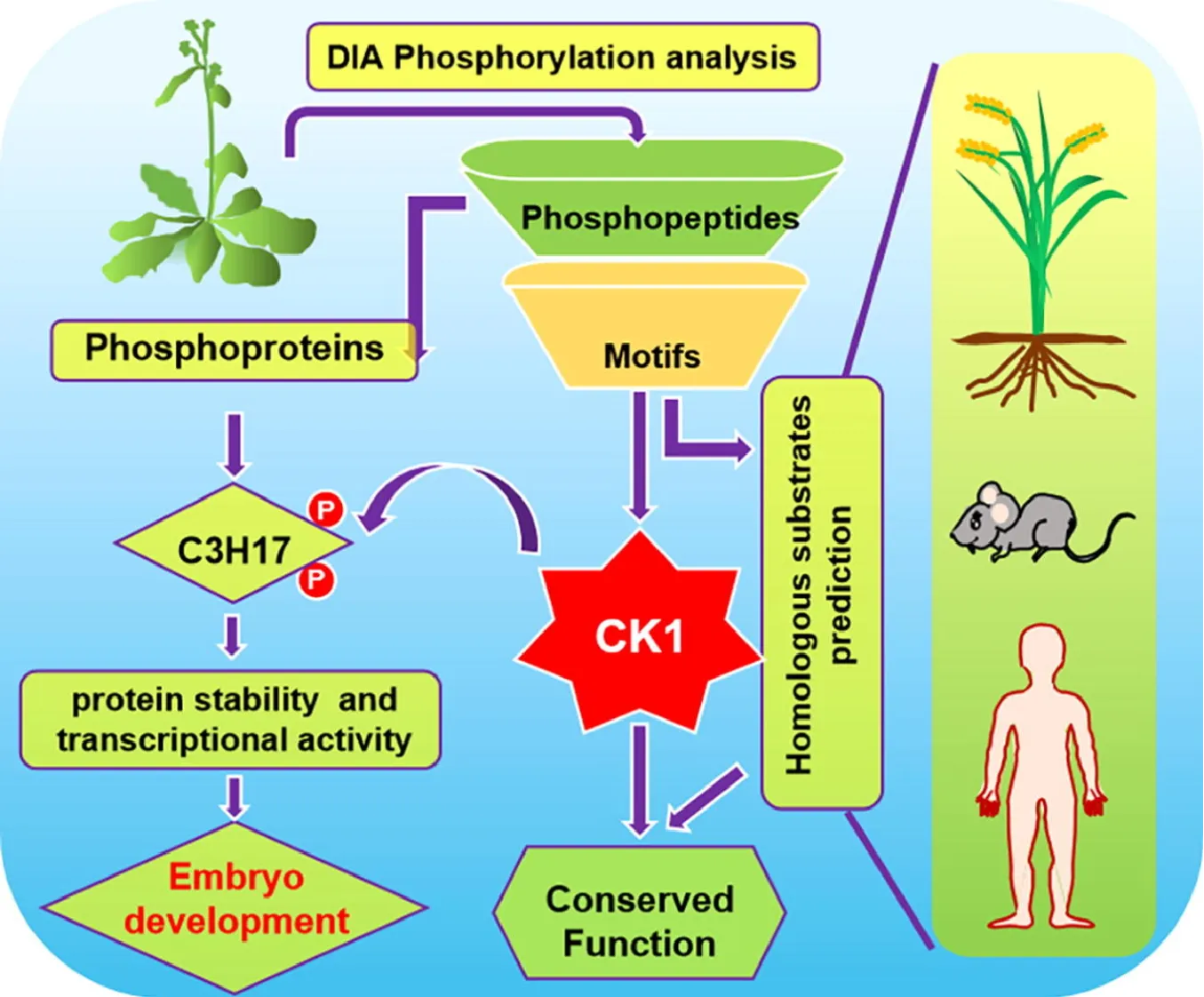
<p>Casein kinase 1 (CK1) plays a crucial role in phosphorylation-mediated signaling pathways across eukaryotes. To systematically identify CK1 substrates, researchers employed DIA-MS-based quantitative phosphoproteomics, analyzing phosphopeptide abundance in Arabidopsis seedlings overexpressing or lacking specific AEL CK1 isoforms. By comparing phosphopeptide profiles between wild-type, overexpression, and mutant lines, researchers identified 3,985 upregulated phosphopeptides and 1,032 phosphoproteins associated with CK1 activity. Motif enrichment analysis revealed eight conserved CK1 phosphorylation motifs, enabling the prediction of novel substrates, including C3H17, a CCCH-type zinc finger transcription factor. Biochemical validation confirmed CK1-mediated phosphorylation stabilizes C3H17, enhancing its transactivation function in embryogenesis. Extending motif searches to rice, mouse, and human proteomes uncovered numerous potential CK1 substrates, demonstrating the power of DIA-MS for cross-species phosphoproteome mapping. This study highlights the high sensitivity and reproducibility of DIA-MS-based phosphoproteomics in unraveling kinase-substrate networks and regulatory mechanisms, offering valuable insights into plant and human signaling pathways.</p>

<div style="text-align:center;">
  <img src="/MtoZ-Biolabs/images/dia-ms-based-quantitative-service3.webp" alt="dia-ms-based-quantitative-service3" style="max-width:100%;" />
</div>

<div style="text-align:right;">
  <i>Qu, L. et al. Sci Bull. 2023.</i>
</div>

<h1 id="deliverables">Deliverables</h1>

<ol>
  <li>Comprehensive Experimental Details</li>
  <li>Materials, Instruments, and Methods</li>
  <li>Total Ion Chromatogram &amp; Quality Control Assessment</li>
  <li>Data Analysis, Preprocessing, and Estimation</li>
  <li>Bioinformatics Analysis</li>
  <li>Raw Data Files</li>
</ol>

<p>MtoZ Biolabs’ DIA MS (Data-Independent Acquisition Mass Spectrometry)-Based Quantitative Service delivers reproducible data suitable for publication to drive innovative research and clinical advancements.</p>]]></content><author><name>MtoZ Biolabs</name></author><category term="DIA" /><category term="data-independent acquisition" /><category term="proteomics" /><category term="mass spectrometry" /><category term="phosphoproteomics" /><summary type="html"><![CDATA[DIA MS (Data-Independent Acquisition Mass Spectrometry)-Based Quantitative Service utilizes next-generation proteomics technology to enable comprehensive, reproducible, and high-throughput protein quantification.]]></summary></entry><entry><title type="html">Data-Dependent Acquisition Service</title><link href="https://mtoz-biolabs.github.io/MtoZ-Biolabs/2026/05/19/data-dependent-acquisition-service.html" rel="alternate" type="text/html" title="Data-Dependent Acquisition Service" /><published>2026-05-19T00:00:00+00:00</published><updated>2026-05-19T00:00:00+00:00</updated><id>https://mtoz-biolabs.github.io/MtoZ-Biolabs/2026/05/19/data-dependent-acquisition-service</id><content type="html" xml:base="https://mtoz-biolabs.github.io/MtoZ-Biolabs/2026/05/19/data-dependent-acquisition-service.html"><![CDATA[<h1 id="data-dependent-acquisition-service">Data-Dependent Acquisition Service</h1>

<p>Data-Dependent Acquisition Service is a highly targeted mass spectrometry approach designed to provide detailed identification and characterization of proteins within complex biological samples. Data-Dependent Acquisition Service is particularly valuable for focused proteomics studies, offering high-quality spectral data to support in-depth analysis of specific proteins or peptides.</p>

<p>The principle of Data-Dependent Acquisition Service (DDA) involves the selective fragmentation of precursor ions based on predefined criteria, such as intensity or abundance. During analysis, the mass spectrometer dynamically identifies the most prominent ions for fragmentation, prioritizing those likely to provide the most informative data. This selective approach ensures the generation of high-resolution spectra, enabling precise identification and quantification of proteins. This selective nature makes Data-Dependent Acquisition Service well-suited for targeted proteomic studies.</p>

<div style="text-align:center;">
  
  <img src="/MtoZ-Biolabs/images/data-dependent-acquisition-service1.webp" alt="data-dependent-acquisition-service1" style="max-width:100%;" />
  
</div>

<div style="text-align:right;">
  <i>Ryu, J. et al. Molecules. 2021.</i>
  
</div>

<div style="text-align:center; font-weight:bold;">

  Figure 1. Principles of Data-Dependent Acquisition (DDA)
  
</div>

<p>The applications of DDA Service are vast and impactful. Data-Dependent Acquisition Service excels in protein identification, enabling the discovery of novel proteins and isoforms. In the realm of post-translational modifications, Data-Dependent Acquisition Service is instrumental in mapping phosphorylation, ubiquitination, glycosylation, and other modifications that regulate protein function. Additionally, Data-Dependent Acquisition Service plays a critical role in drug target discovery and validation, providing high-quality data essential for understanding protein interactions and pathways.</p>

<h1 id="service-at-mtoz-biolabs">Service at MtoZ Biolabs</h1>

<p>MtoZ Biolabs provides Data-Dependent Acquisition Service tailored to meet the diverse needs of modern proteomics research. Utilizing state-of-the-art mass spectrometers like the Thermo Orbitrap Fusion Lumos, our team delivers high sensitivity and resolution in protein analysis. We provide customized experimental designs, from sample preparation to data interpretation, ensuring each project is processed according to its experimental requirements. Our expertise in DDA empowers researchers to identify and quantify proteins with exceptional accuracy, driving advancements in fields such as drug discovery, biomarker identification, and systems biology.</p>

<div style="text-align:center;">
  <img src="/MtoZ-Biolabs/images/data-dependent-acquisition-service2.webp" alt="data-dependent-acquisition-service2" style="max-width:100%;" />
</div>

<div style="text-align:right;">
  <i>Krasny, L. et al. Mol Omics. 2021.</i>
</div>

<div style="text-align:center; font-weight:bold;">
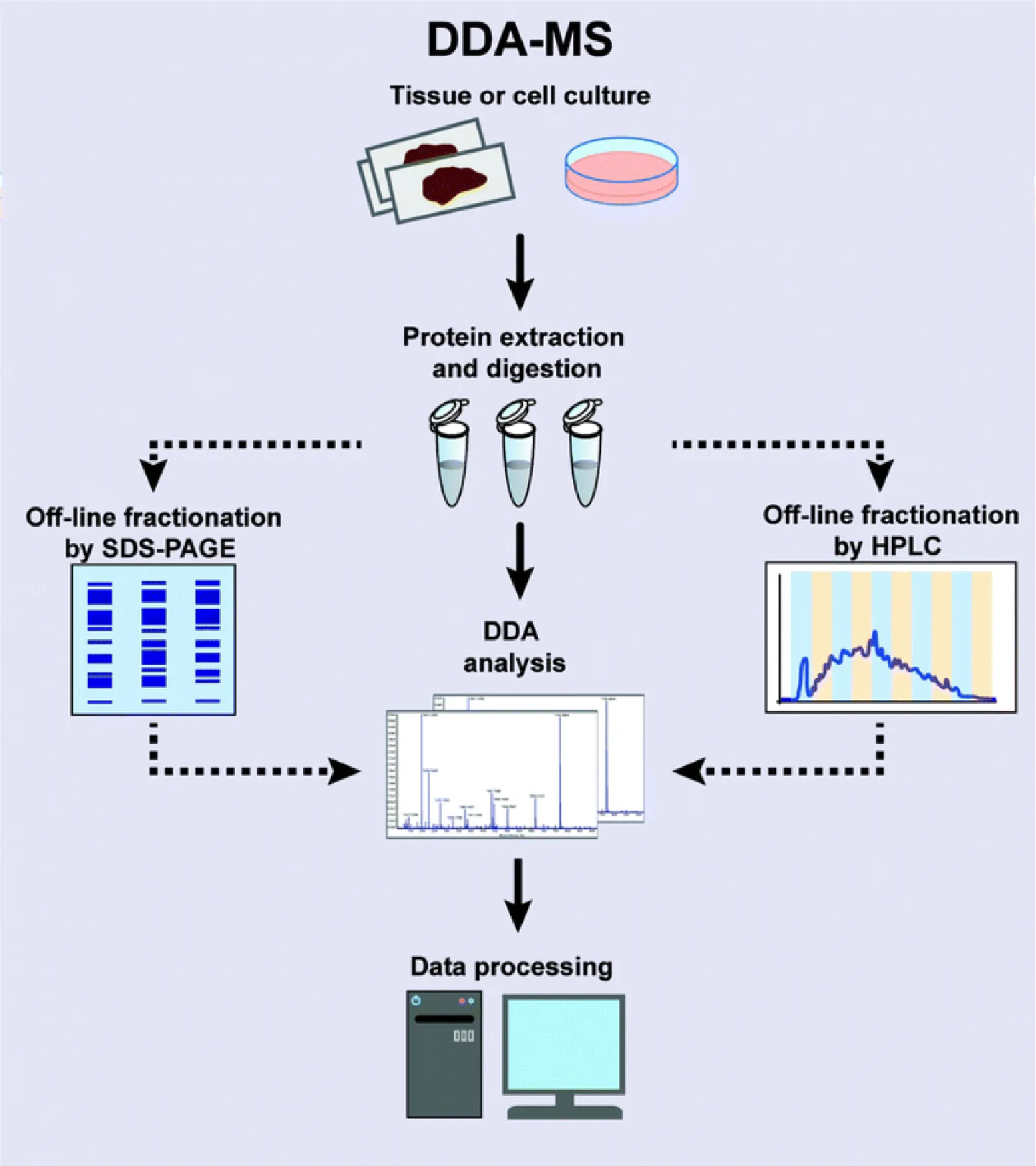
  Figure 2. Schematic Workflow of the Label-Free DDA-MS
</div>

<h1 id="our-advantages">Our Advantages</h1>

<ol>
  <li>
    <p>Advanced Analysis Platform: MtoZ Biolabs established an advanced Data-Dependent Acquisition Service platform, providing reliable and efficient analysis with high accuracy.</p>
  </li>
  <li>
    <p>Customizable Service: Our Data-Dependent Acquisition Services are tailored to suit specific research objectives, providing flexibility in experimental design and maximizing the relevance of results.</p>
  </li>
  <li>
    <p>One-Time-Charge: Our pricing is transparent, no hidden fees or additional costs.</p>
  </li>
  <li>
    <p>High-Data-Quality: Deep data coverage with strict data quality control. AI-powered bioinformatics platform integrates all data-dependent acquisition analysis data, providing clients with a comprehensive data report.</p>
  </li>
  <li>
    <p>Fast Turnaround: The process from sample handling to report generation is efficient, shortening the analysis cycle.</p>
  </li>
</ol>

<h1 id="applications">Applications</h1>

<ol>
  <li>Comprehensive Protein Identification</li>
  <li>Post-Translational Modification Analysis</li>
  <li>Biomarker Discovery and Validation</li>
  <li>Drug Target Identification and Interaction Studies</li>
  <li>Exploratory and Targeted Proteomics</li>
</ol>

<h1 id="faq">FAQ</h1>

<p>Q: How do I decide whether to use Data-Dependent Acquisition (DDA) or Data-Independent Acquisition (DIA) for my proteomics study?</p>

<p>The choice between DDA and DIA depends on your research goals and sample complexity. Data-dependent acquisition service is ideal for targeted analyses, such as identifying specific proteins or post-translational modifications, as it generates high-quality spectra for abundant ions. On the other hand, data-independent acquisition is better suited for comprehensive, large-scale studies where consistent quantification and broad proteome coverage are needed, especially for complex or low-abundance samples. For optimal results, DDA and DIA can be combined—using DDA to create spectral libraries and DIA for unbiased quantification across samples.</p>

<h1 id="deliverables">Deliverables</h1>

<ol>
  <li>Comprehensive Experimental Details</li>
  <li>Materials, Instruments, and Methods</li>
  <li>Total Ion Chromatogram &amp; Quality Control Assessment (project-dependent)</li>
  <li>Data Analysis, Preprocessing, and Estimation (project-dependent)</li>
  <li>Bioinformatics Analysis</li>
  <li>Raw Data Files</li>
</ol>

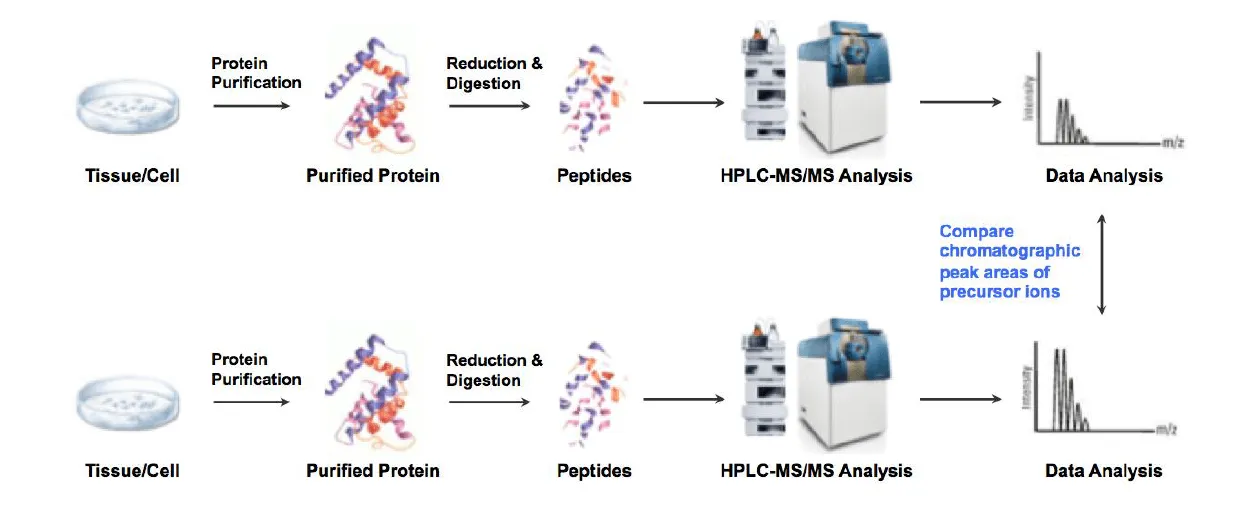
<p>MtoZ Biolabs, an integrated Chromatography and Mass Spectrometry (MS) Services Provider, provides advanced proteomics, metabolomics, and biopharmaceutical analysis services to researchers in biochemistry, biotechnology, and biopharmaceutical fields. Our ultimate aim is to provide more rapid, high-throughput, and cost-effective analysis, with exceptional data quality and minimal sample consumption.</p>]]></content><author><name>MtoZ Biolabs</name></author><category term="DDA" /><category term="data-dependent acquisition" /><category term="proteomics" /><category term="mass spectrometry" /><summary type="html"><![CDATA[Data-Dependent Acquisition is a highly targeted mass spectrometry approach designed to provide detailed identification and characterization of proteins within complex biological samples.]]></summary></entry><entry><title type="html">Label-Free Quantitative Proteomics Service, MS Based</title><link href="https://mtoz-biolabs.github.io/MtoZ-Biolabs/2026/05/14/label-free-quantitative-proteomics-service-ms-based.html" rel="alternate" type="text/html" title="Label-Free Quantitative Proteomics Service, MS Based" /><published>2026-05-14T00:00:00+00:00</published><updated>2026-05-14T00:00:00+00:00</updated><id>https://mtoz-biolabs.github.io/MtoZ-Biolabs/2026/05/14/label-free-quantitative-proteomics-service-ms-based</id><content type="html" xml:base="https://mtoz-biolabs.github.io/MtoZ-Biolabs/2026/05/14/label-free-quantitative-proteomics-service-ms-based.html"><![CDATA[<p>Label-free analysis is a powerful technique for identifying and quantifying relative changes in complex protein samples. In this method, samples are run individually and identified by MS/MS information. Relative quantitation of different samples is then analyzed by aligning chromatographic peak areas of precursor ions between various runs. The most distinctive advantage is that it quantifies proteins without any use of labels, and can analyze unlimited number of samples. Since Label-free is relatively simple and easy compared to other proteomics techniques, it has been widely used for proteomics study and biomarker discovery.</p>

<hr />

<h2 id="analysis-workflow">Analysis Workflow</h2>

<div style="text-align: center;">
  <img src="/MtoZ-Biolabs/images/label-free1.webp" alt="label-free1" style="max-width:100%;" />
</div>

<hr />

<h2 id="our-advantages">Our Advantages</h2>

<ol>
  <li>Does not require expensive isotope labeling reagents, resulting in a shorter experimental duration.</li>
  <li>Enables comparative analysis of differential protein expression across different species.</li>
  <li>Overcomes sample number limitations inherent to labeled quantification techniques, offering greater flexibility and convenience.</li>
  <li>Suitable for Analyzing Various Types of Samples, Including Tissue, Cell, Blood, etc.</li>
</ol>

<hr />

<h2 id="sample-submission-requirements">Sample Submission Requirements</h2>

<div style="text-align: center;">
  <img src="/MtoZ-Biolabs/images/label-free2.webp" alt="label-free2" style="max-width:100%;" />
</div>

<p>Note: For Co-IP protein samples, only 2-5 ug is required. During sample elution, detergents (such as SDS) and high oxygen concentration should be avoided. Alternatively, you can send the sample beads to us directly.</p>

<hr />

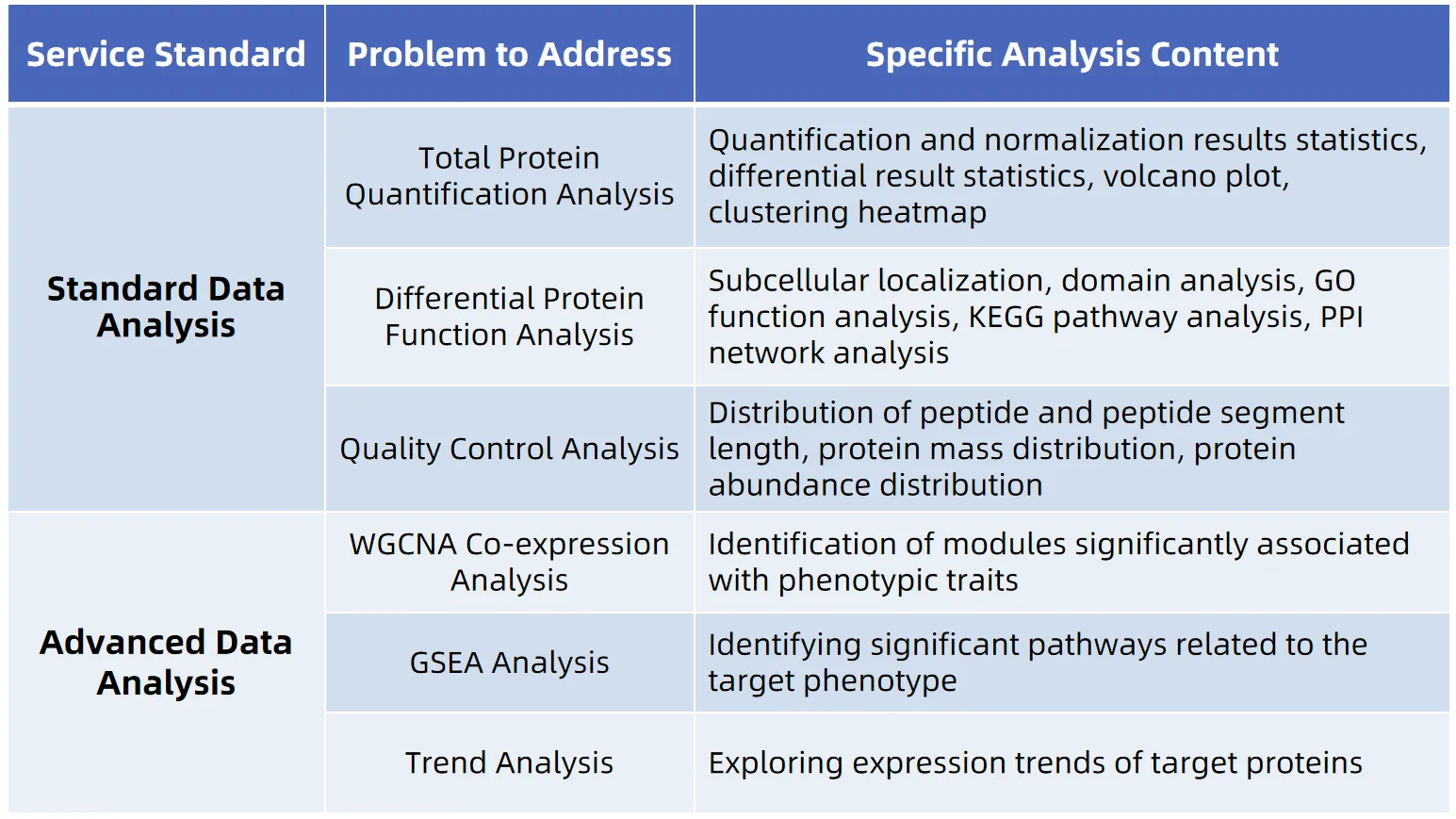
<h2 id="bioinformatics-analysis">Bioinformatics Analysis</h2>

<div style="text-align: center;">
  <img src="/MtoZ-Biolabs/images/label-free3.webp" alt="label-free3" style="max-width:100%;" />
</div>

<hr />

<h2 id="deliverables">Deliverables</h2>

<h3 id="1-experiment-procedures">1. Experiment Procedures</h3>

<h3 id="2-parameters-of-liquid-chromatography-and-mass-spectrometer">2. Parameters of Liquid Chromatography and Mass Spectrometer</h3>

<h3 id="3-ms-raw-data-files">3. MS Raw Data Files</h3>

<h3 id="4-peptide-identifications-and-intensities">4. Peptide Identifications and Intensities</h3>

<h3 id="5-protein-identifications-and-intensities">5. Protein Identifications and Intensities</h3>

<h3 id="6-bioinformatics-analysis">6. Bioinformatics Analysis</h3>]]></content><author><name>MtoZ Biolabs</name></author><summary type="html"><![CDATA[Label-free analysis is a powerful technique for identifying and quantifying relative changes in complex protein samples. In this method, samples are run individually and identified by MS/MS information. Relative quantitation of different samples is then analyzed by aligning chromatographic peak areas of precursor ions between various runs. The most distinctive advantage is that it quantifies proteins without any use of labels, and can analyze unlimited number of samples. Since Label-free is relatively simple and easy compared to other proteomics techniques, it has been widely used for proteomics study and biomarker discovery.]]></summary></entry><entry><title type="html">TMT Quantitative Proteomics Analysis Service</title><link href="https://mtoz-biolabs.github.io/MtoZ-Biolabs/2026/05/13/tmt-quantitative-proteomics-analysis-service.html" rel="alternate" type="text/html" title="TMT Quantitative Proteomics Analysis Service" /><published>2026-05-13T00:00:00+00:00</published><updated>2026-05-13T00:00:00+00:00</updated><id>https://mtoz-biolabs.github.io/MtoZ-Biolabs/2026/05/13/tmt-quantitative-proteomics-analysis-service</id><content type="html" xml:base="https://mtoz-biolabs.github.io/MtoZ-Biolabs/2026/05/13/tmt-quantitative-proteomics-analysis-service.html"><![CDATA[<h1 id="tmt-quantitative-proteomics-analysis-service">TMT Quantitative Proteomics Analysis Service</h1>

<p>Tandem mass tags (TMT) technology is a tandem mass spectrometry labeling technology developed by Thermo Fisher Company, mainly used for the identification and quantification of proteins in different samples. Each TMT labeling reagent consists of an NHS-ester group with amine-reactive activity, a mass normalization group, and an MS/MS reporter group. The isotope label of each labeling reagent has the same precursor mass. After the peptide segments are labeled by the reagent, they can react with the N-terminal and primary amine groups of the amino acid side chains and then be detected through the reporter group.</p>

<p>TMT technology can use up to 18 stable isotope tags, enabling the simultaneous comparison of protein levels across 18 different samples. This technique can label virtually all peptide or protein samples, making it a widely adopted method for discovering quantitative protein biomarkers. Depending on the experimental requirements, 2-plex, 6-plex, 10-plex, 11-plex, 16-plex or 18-plex isotopic tags can be employed to compare the relative protein abundance across 2, 6, 10, 11, 16 or 18 sample groups, respectively.</p>

<p>TMT quantitative analysis is performed by measuring the intensity of the fragment reporter group ions released in tandem mass spectrometry mode (MS2) during peptide fragmentation. Precursor ions are selected for fragmentation in full scan mode (MS1), and the ion selection step reduces noise levels, providing favorable conditions for subsequent analysis steps. Ideally, only one selected precursor ion undergoes fragmentation during the precursor ion fragmentation process. However, in practice, other precursor ions are usually captured within the specified m/z window and fragmented together with the selected precursor.</p>

<p>MtoZ Biolabs performs TMT quantitative proteomics analysis using Thermo Fisher’s Orbitrap Fusion Lumos mass spectrometry platform combined with nano-liquid chromatography. The Orbitrap Fusion Lumos mass spectrometer is a high-resolution and high-sensitivity mass spectrometry platform, ensuring the sensitivity for identifying low-abundance peptide fragments. Additionally, it employs a combination of HCD and ETD modes during peptide fragmentation, ensuring the integrity of peptide fragments.</p>

<hr />

<h2 id="analysis-workflow">Analysis Workflow</h2>

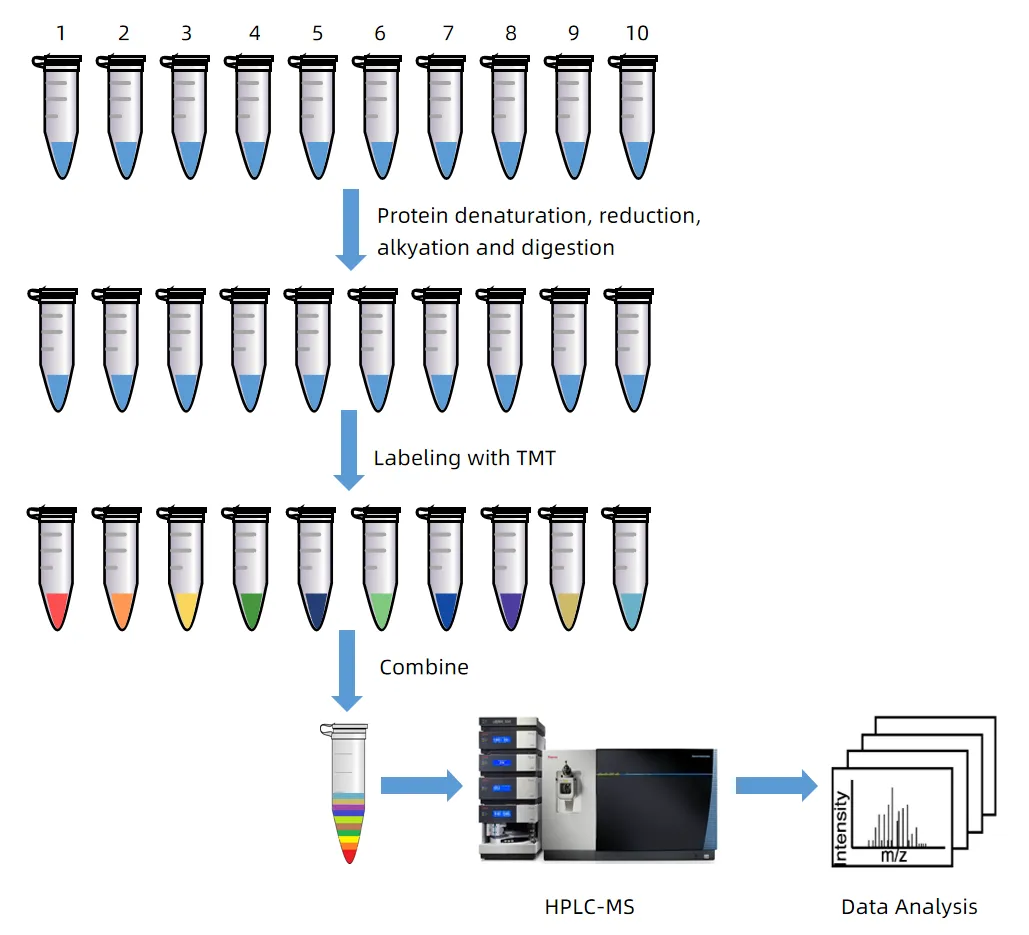
<p>The general process of TMT is illustrated below. Different protein samples are denatured, reduced, alkylated, and digested into peptides. These peptides are then labeled with a TMT kit and merged into a single sample. The merged sample is separated into fractions using high-performance liquid chromatography (HPLC), and the fractions are then grouped into 10 samples. After purification, each sample is analyzed by HPLC-MS to gain protein qualitative and quantitative data.</p>

<div style="text-align: center;">
  <img src="/MtoZ-Biolabs/images/tmt-quantitative-proteomics-analysis-service-1.webp" alt="tmt-quantitative-proteomics-analysis-service-1" style="max-width:100%;" />
</div>

<p style="text-align:center;">
Figure 1. Workflow for Relative Quantification Using 10 plex TMT
</p>

<hr />

<h2 id="our-advantages">Our Advantages</h2>

<h3 id="1-high-throughput-with-no-sample-number-limitations">1. High Throughput with No Sample Number Limitations</h3>
<p>A single run can quantify proteins in up to 18 samples simultaneously. For studies involving more than 18 samples, internal standards can be used to align data across multiple runs, thus enabling comprehensive comparisons without restrictions on sample numbers.</p>

<h3 id="2-enhanced-quantification-accuracy-and-reproducibility">2. Enhanced Quantification Accuracy and Reproducibility</h3>
<p>By labeling different samples and processing them together uniformly, the TMT method minimizes experimental variations typically introduced by separate handling and analysis, thereby improving both the accuracy and reproducibility of quantification.</p>

<h3 id="3-broad-protein-detection-capability">3. Broad Protein Detection Capability</h3>
<p>The TMT approach is applicable across all species, without any species-specific restrictions. It is effective in detecting a wide range of proteins, including cytoplasmic, membrane, nuclear, extracellular, and secreted proteins. The technique accommodates a broad spectrum of protein abundances and molecular weights, facilitating the detection of low-abundance proteins, highly alkaline proteins, and proteins smaller than 10 kDa or larger than 200 kDa.</p>

<hr />

<h2 id="sample-submission-requirements">Sample Submission Requirements</h2>

<div style="text-align: center;">
  <img src="/MtoZ-Biolabs/images/tmt-quantitative-proteomics-analysis-service-2.webp" alt="tmt-quantitative-proteomics-analysis-service-2" style="max-width:100%;" />
</div>

<p>TMT proteomics analysis at MtoZ Biolabs can be performed on samples in both liquid and solid states. Solid samples can be transported with ice packs; liquid samples can be vacuum-dried or freeze-dried and transported with ice packs or transported with dry ice.</p>]]></content><author><name>MtoZ Biolabs</name></author><summary type="html"><![CDATA[TMT Quantitative Proteomics Analysis Service]]></summary></entry></feed>